



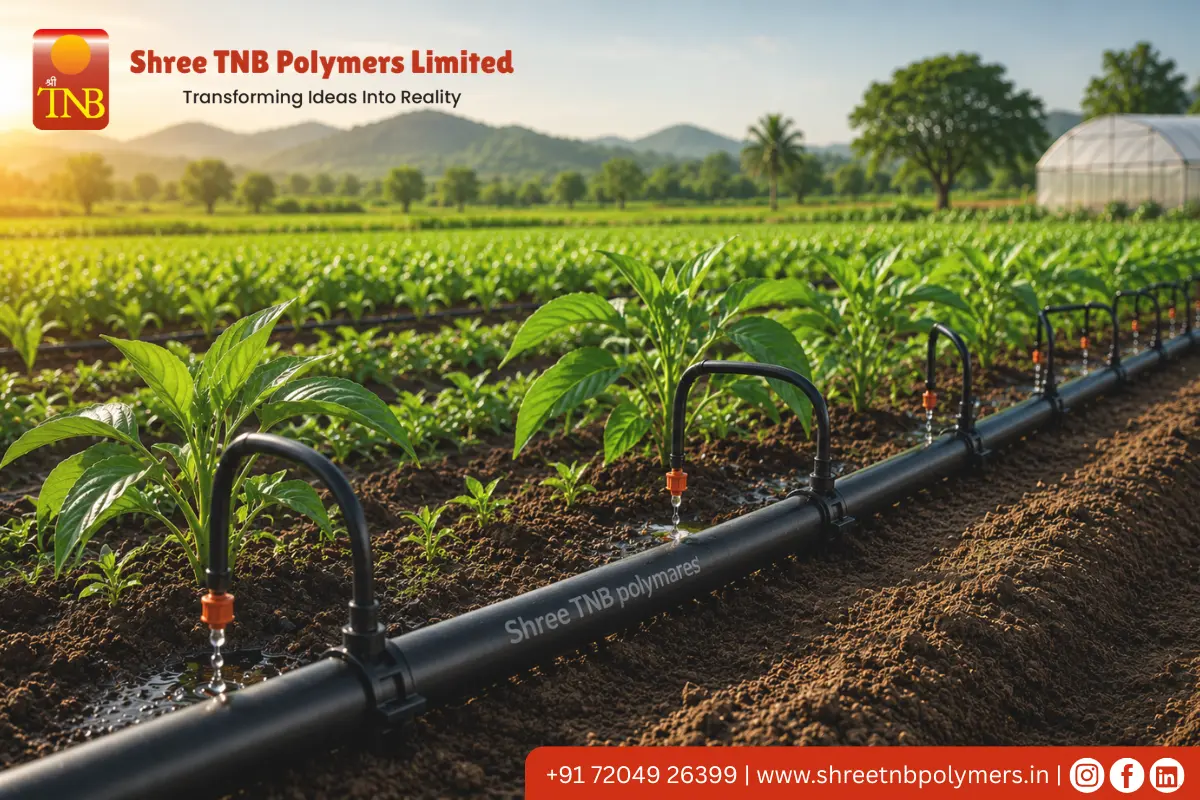
Modern agriculture is continuously evolving with the adoption of advanced technologies and sustainable farming techniques. Farmers today are looking for efficient farming methods that can increase crop productivity while reducing water usage and operational costs. One of the most effective solutions in modern farming irrigation is the drip irrigation system.
A drip irrigation system is a highly efficient agricultural irrigation system that delivers water directly to the roots of plants through pipes and emitters. Unlike traditional irrigation methods, this precision irrigation system minimizes water wastage, improves nutrient absorption, and supports healthy crop growth. As water scarcity becomes a major challenge in agriculture, farmers are increasingly adopting water saving irrigation systems to improve farm productivity and long-term sustainability.
In this blog, we will explore the major benefits of drip irrigation systems, how they support modern agriculture technology, and why they are becoming one of the most preferred smart irrigation solutions for farmers.
What is a Drip Irrigation System?
A drip irrigation system is a modern agricultural irrigation system designed to provide water slowly and directly to the root zone of crops. This precision irrigation system uses pipes, valves, filters, and emitters to distribute water evenly and efficiently across the farm.
Unlike flood irrigation and other traditional irrigation methods, drip irrigation in farming reduces unnecessary water flow and ensures plants receive the exact amount of water they need. This smart irrigation solution is widely used in vegetable farming, fruit orchards, greenhouses, and commercial agriculture because of its high efficiency and water-saving capabilities.
The increasing demand for sustainable farming techniques has made drip irrigation for agriculture one of the most preferred irrigation methods in modern farming solutions.
Top Benefits of Drip Irrigation System for Modern Farming
1. Saves Water Efficiently
One of the biggest benefits of drip irrigation systems is water conservation. This water saving irrigation system delivers water directly to plant roots, reducing evaporation, runoff, and unnecessary water wastage.
Traditional irrigation methods often use excessive amounts of water, but drip irrigation for agriculture ensures that every drop is used efficiently. This makes it one of the best sustainable irrigation methods for farmers, especially in areas facing water shortages.
Modern farming irrigation systems like drip irrigation help farmers maintain better crop production while using significantly less water.
2. Improves Crop Yield and Plant Growth
A drip irrigation system provides a controlled and continuous water supply that helps plants grow healthier and stronger. Proper moisture levels improve nutrient absorption and reduce stress on crops.
This efficient farming method supports consistent plant growth, resulting in higher crop yield and improved crop quality. Farmers using drip irrigation in farming often experience better productivity in vegetable farming, fruit cultivation, greenhouse farming, and commercial agriculture.
The ability of precision irrigation systems to maintain balanced soil moisture makes them highly beneficial for modern agriculture technology.
3. Reduces Weed Growth
Another major advantage of drip irrigation systems is reduced weed growth. Since water is supplied only to the crop roots, nearby soil areas remain dry, limiting the growth of weeds.
Compared to traditional agricultural irrigation systems, drip irrigation helps farmers reduce the time and cost required for weed management. This makes it a practical and cost-effective smart irrigation solution for modern farming irrigation.
4. Saves Labor and Time
Drip irrigation systems can be automated, reducing the need for manual watering and labor-intensive irrigation methods. Farmers can efficiently manage large agricultural fields with minimal effort.
This modern farming irrigation technique saves both time and labor costs, making it one of the most efficient farming methods available today. Automated smart irrigation solutions also improve farm management and operational efficiency.
5. Prevents Soil Erosion and Nutrient Loss
Traditional irrigation methods can lead to soil erosion and nutrient runoff because of excessive water flow. In contrast, drip irrigation systems release water slowly and evenly, protecting soil structure and fertility.
This sustainable farming technique helps maintain healthy soil conditions while reducing fertilizer wastage. Many farmers use fertigation with drip irrigation for agriculture to deliver nutrients directly to plant roots for better absorption and crop development. As a result, drip irrigation systems improve both soil health and agricultural productivity.
6. Suitable for Different Crops and Farm Types
Drip irrigation systems are highly versatile and suitable for a wide range of crops, including vegetables, fruits, flowers, cotton, sugarcane, and greenhouse plants.
Whether it is small-scale farming or large commercial agriculture, drip irrigation in farming provides reliable water management for different agricultural requirements. This modern agriculture technology is widely used in polyhouses, nurseries, orchards, and open-field farming.
The flexibility of precision irrigation systems makes them an ideal choice for modern farming solutions.
7. Reduces Fertilizer Wastage
One of the most valuable drip irrigation benefits for farmers is efficient fertilizer usage. Since nutrients are supplied directly to the root zone through fertigation, plants absorb fertilizers more effectively.
This process minimizes nutrient loss, reduces fertilizer costs, and supports sustainable farming techniques. Drip irrigation systems help farmers achieve better resource management while improving crop quality and yield.
8. Supports Sustainable Farming Practices
Sustainability has become an essential part of modern agriculture, and drip irrigation systems play a major role in promoting eco-friendly farming practices.
By reducing water consumption, minimizing fertilizer loss, and improving overall resource management, drip irrigation supports sustainable farming techniques and environmentally responsible agriculture.
Farmers adopting smart irrigation solutions can improve long-term productivity while conserving natural resources for future generations.
Drip Irrigation vs Traditional Irrigation Methods
Drip Irrigation System
- Water Usage: Low water consumption with minimal wastage.
- Water Efficiency: Very high, as water is delivered directly to the root zone.
- Crop Yield: Higher crop productivity due to precise watering.
- Weed Growth: Minimal weed growth because only the crop area receives water.
- Soil Erosion: Low risk of soil erosion due to controlled water application.
- Labor Requirement: Less labor needed for irrigation management.
- Fertilizer Efficiency: Better nutrient absorption with fertigation compatibility.
- Sustainability: Excellent sustainability through water and resource conservation.
Traditional Irrigation
- Water Usage: High water consumption with greater wastage.
- Water Efficiency: Moderate efficiency due to evaporation and runoff losses.
- Crop Yield: Average crop productivity compared to drip systems.
- Weed Growth: More weed growth as water spreads across larger areas.
- Soil Erosion: Higher chances of soil erosion from excessive water flow.
- Labor Requirement: More labor required for operation and maintenance.
- Fertilizer Efficiency: Lower efficiency due to nutrient leaching and runoff.
- Sustainability: Limited sustainability because of higher water and resource usage.
Applications of Drip Irrigation in Modern Agriculture
Today, drip irrigation systems are widely used across different sectors of agriculture, including:
- Vegetable farming
- Fruit orchards
- Greenhouse farming
- Polyhouse cultivation
- Commercial agriculture
- Nursery plantations
- Landscape irrigation
Why Farmers are Choosing Drip Irrigation Systems
Farmers are rapidly switching to drip irrigation systems because of increasing water scarcity, rising labor costs, and the growing need for sustainable farming techniques. Government support programs and awareness about water saving irrigation systems have also encouraged farmers to adopt modern agriculture technology. Drip irrigation for agriculture provides long-term benefits by improving crop yield, reducing operational expenses, and increasing farm efficiency.
Why Choose Shree TNB for Drip Irrigation Solutions?
Shree TNB is a trusted provider of high-quality drip irrigation systems designed to support modern farming irrigation and sustainable agriculture practices. With a focus on water-saving irrigation systems, advanced smart irrigation solutions, and reliable agricultural irrigation products, Shree TNB helps farmers improve crop productivity while reducing water wastage and operational costs.
- High-quality and durable drip irrigation systems
- Efficient water saving irrigation solutions for modern farming
- Suitable for vegetable farming, orchards, greenhouses, and commercial agriculture
- Advanced precision irrigation systems for better crop growth
- Reliable support and cost-effective solutions for sustainable farming techniques
Tips for Choosing the Right Drip Irrigation System
When selecting a drip irrigation system for farming, farmers should consider:
- Crop type
- Farm size
- Water availability
- Soil condition
- Quality of pipes and emitters
- Maintenance requirements
- Future expansion possibilities
Choosing a reliable agricultural irrigation system ensures better performance, durability, and long-term productivity.
Conclusion
The benefits of drip irrigation systems for modern farming are significant. From saving water and improving crop yield to reducing labor costs and supporting sustainable farming techniques, drip irrigation has become an essential part of modern agriculture technology. As farmers continue adopting efficient farming methods and smart irrigation solutions, drip irrigation for agriculture will play a major role in increasing productivity and conserving natural resources. Investing in a high-quality precision irrigation system is not only beneficial for farm output but also important for building a more sustainable future in agriculture.Modern farming solutions like drip irrigation systems are helping farmers achieve better efficiency, improved crop quality, and long-term agricultural success.
Gallery
.webp)