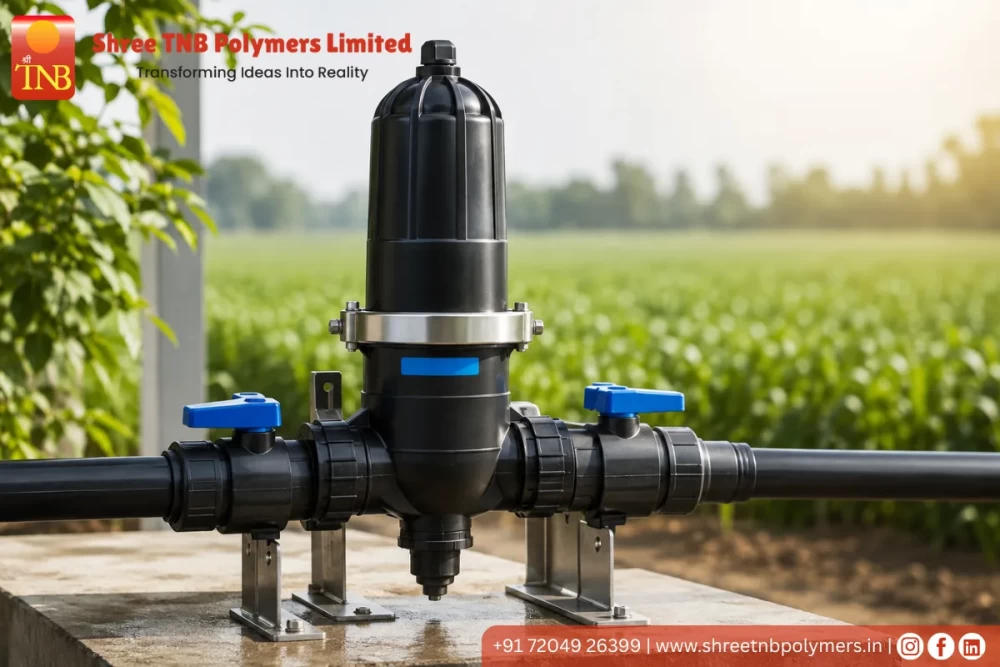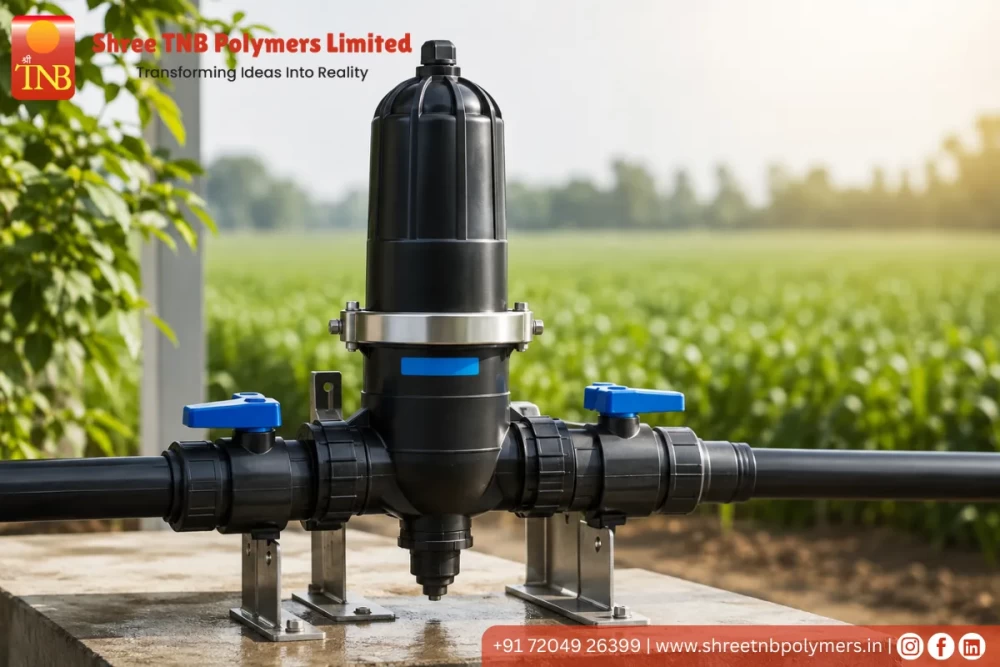
Clean irrigation water is essential for maintaining a reliable agricultural irrigation system. Water from farms, borewells, canals, reservoirs, and other sources can contain soil particles, sand, suspended matter, and other contaminants that may affect irrigation equipment.
This becomes particularly important in drip irrigation, where small passages in emitters and other components can be sensitive to unwanted particles. A suitable Disc Filter can help remove particulate matter before water reaches these downstream components.
However, choosing an irrigation filter should not be based only on the filter's appearance or connection size. Water quality, required flow, filtration requirements, irrigation method, and maintenance all influence which solution is appropriate.
This guide explains the basics of disc filtration and the factors farmers and irrigation professionals should consider when selecting a Disc Filter for Irrigation.
What Is a Disc Filter?
A Disc Filter is a mechanical filtration device that uses a stack of grooved discs to filter particulate matter from water.
The discs are placed inside a filter housing and compressed together. As water passes through the filtration element, particles are captured within the grooves and filtration pathways while filtered water continues into the irrigation network.
Disc filters are used in various water filtration applications, including:
- Agricultural irrigation
- Drip irrigation systems
- Horticulture
- Nursery irrigation
- Greenhouse irrigation
- General water distribution
The actual suitability of a disc filter depends on the quality of the incoming water and the filtration requirements of the irrigation system.
Why Is Filtration Important in Agricultural Irrigation?
Agricultural water is not always free from suspended particles. Depending on the source, irrigation water can carry soil, sand, organic matter, and other materials. If these particles enter the irrigation network, they may accumulate in sensitive components and affect water distribution. A suitable Agricultural Irrigation Filter can help reduce this risk by filtering unwanted particulate matter before the water reaches downstream equipment.
Effective filtration can support:
- Better water distribution
- Reduced clogging risk
- More consistent irrigation
- Protection of downstream components
- Easier irrigation system maintenance
Filtration is therefore an important part of an overall Agricultural Water Management strategy.
How Does a Disc Filter Work?
The working principle of disc filtration is relatively simple. Inside the filter is a stack of specially designed discs. Each disc contains fine grooves that create multiple filtration pathways when the discs are compressed together. When water enters the filter, it passes through these pathways. Suspended particles are trapped within the disc structure, while filtered water continues through the outlet. As filtration continues, particles accumulate on the filtration element. The discs must then be cleaned according to the manufacturer's recommended procedure.
Key Benefits of Disc Filters for Irrigation
1. Effective Removal of Suspended Particles
One of the primary benefits of an Irrigation Disc Filter is its ability to mechanically filter particulate matter from irrigation water.
This can be useful when the water source contains soil or other suspended particles that could otherwise enter the irrigation network.
2. Helps Protect Irrigation Components
A properly selected Disc Filter for Agriculture can help reduce the amount of particulate matter reaching downstream equipment.
This is particularly relevant for Drip Irrigation Systems, where clogged emitters can affect water delivery to crops.
By placing appropriate filtration upstream, farmers can help protect components that are more sensitive to water quality.
3. Supports More Consistent Water Distribution
Water quality can influence the performance of an irrigation system.
When excessive particles accumulate within pipelines or irrigation components, water flow may become less consistent.
A suitable Disc Filtration System helps manage particulate matter before it reaches the distribution network, supporting more consistent operation when the filter is correctly sized and maintained.
4. Suitable for Different Agricultural Applications
Disc filters can be incorporated into various agricultural irrigation setups depending on the water source and filtration requirements.
They can be considered for:
- Open-field agriculture
- Drip irrigation
- Horticulture
- Nurseries
- Greenhouses
- Plantation irrigation
The right filter should always be selected according to the specific characteristics of the water and the irrigation system.
Disc Filter vs. Other Irrigation Filters
A disc filter is one of several filtration technologies available for agricultural irrigation.
Different filters are designed to address different types of contaminants.
Screen Filters
Screen filters use a mesh screen to retain suspended particles from water. They can be suitable for certain irrigation applications where the primary filtration requirement involves suspended solids.
Hydrocyclone Filters
Hydrocyclone filters are designed primarily to separate heavier particles such as sand from water using centrifugal action.
They can be particularly useful where groundwater or another source carries significant quantities of sand.
Sand Filters
Sand or media filtration systems can be used where water contains certain organic and suspended contaminants that require a different filtration approach.
Disc Filters
Disc filters use a stack of grooved discs to provide mechanical filtration of particulate matter.
Therefore, choosing between a Disc Filter, Screen Filter, Hydrocyclone Filter, or Sand Filter should depend on the water source and type of contamination rather than assuming that one technology is universally better.
How to Choose the Right Disc Filter
Choosing the right Disc Filter Irrigation System begins with understanding the requirements of the farm.
1. Assess the Water Source
Start by identifying where your irrigation water comes from.
For example:
- Borewell
- Farm pond
- Canal
- River
- Reservoir
- Other surface-water sources
Each source can have different levels and types of suspended material.
2. Understand What Needs to Be Filtered
Not every water source contains the same type of contamination.
Before selecting a filter, determine whether the main concern is:
- Soil particles
- Suspended solids
- Sand
- Organic matter
- Algae
- Other debris
This matters because different filtration technologies are better suited to different contaminants.
For example, if the main issue is heavy sand, a hydrocyclone may be appropriate as part of the overall filtration arrangement. If particulate filtration is the primary requirement, a disc filter may be considered.
3. Consider the Required Flow Rate
The filter must be suitable for the irrigation system's required flow.
Consider:
- Pump capacity
- Number of irrigation zones
- Total cultivated area
- Pipeline arrangement
- Irrigation method
- Expected water demand
Selecting filtration capacity without considering the overall flow requirements can affect system performance.
4. Match Filtration With the Irrigation Method
The filtration requirement can also depend on the irrigation method.
For example, a drip irrigation system generally requires careful filtration because its emitters contain relatively small water passages.
Sprinkler and other irrigation systems may have different requirements.
The goal is not simply to choose the finest possible filtration. Instead, the filtration system should provide the required level of particle removal while remaining practical for the water source and irrigation network.
What Should Farmers Consider Before Buying?
Before purchasing an Agricultural Disc Filter, consider these questions:
- What is the source of irrigation water?
- What contaminants are present?
- What flow rate does the system require?
- What type of irrigation system is being used?
- How frequently will the filter require cleaning?
- Is replacement or maintenance support available?
- Does the filter meet the requirements of the irrigation system?
Answering these questions makes it easier to narrow down the appropriate filtration solution.
5. Consider Filtration Capacity
Filtration capacity is one of the most important factors when selecting a Disc Filter for Irrigation.
The filter should be capable of handling the required water flow without becoming an unnecessary restriction in the system.
When evaluating filtration capacity, consider:
- Required irrigation flow
- Pump capacity
- Number of irrigation zones
- Water demand
- Pipeline arrangement
- Expected operating conditions
Choosing a filter based only on the physical pipeline connection is not enough. The filtration system needs to work effectively with the overall irrigation network. For larger agricultural operations, the filtration arrangement may also need to account for changes in flow demand between different irrigation zones.
Where Should a Disc Filter Be Installed?
The position of the Irrigation Disc Filter can influence how effectively it protects downstream irrigation equipment. In a typical system, filtration is installed after the water source and pumping arrangement and before sensitive downstream irrigation components.
A simplified arrangement may look like:
Water Source → Pump → Filtration → Main Pipeline → Irrigation Network
The exact configuration can vary depending on the farm's layout and the type of water source. For drip irrigation, placing appropriate filtration upstream of the drip lines can help reduce the amount of particulate matter entering the emitters. A qualified irrigation professional should determine the final system arrangement based on the specific site conditions.
Disc Filters for Drip Irrigation
Drip Irrigation delivers water directly or close to the crop root zone through emitters. Because these emitters have relatively small flow passages, maintaining suitable water quality is particularly important.
A properly selected Disc Filter for Agriculture can help remove particulate matter before water reaches the drip system.
This can help support:
- More consistent emitter performance
- Reduced clogging risk
- Better water distribution
- Easier system maintenance
- More reliable irrigation
However, filtration alone does not solve every water-quality problem.
If irrigation water contains dissolved salts, biological growth, or other contaminants, additional water-treatment or filtration measures may be necessary depending on the specific situation.
Disc Filter Cleaning and Maintenance
Even a good-quality Disc Filtration System requires regular maintenance.
As particles accumulate on the discs, filtration performance can be affected. The filter should therefore be inspected and cleaned according to the manufacturer's recommendations and the actual condition of the water.
Basic maintenance may include:
- Monitoring pressure across the filter
- Inspecting the filtration element
- Cleaning accumulated particles
- Checking seals and connections
- Inspecting the filter housing
- Reassembling components correctly
The frequency of cleaning depends heavily on the water source and contamination level.
Why Pressure Monitoring Matters
Pressure can provide useful information about the condition of an irrigation filter. As particles accumulate, resistance to water flow can increase. Monitoring the pressure difference across the filter can therefore help identify when cleaning may be required. Farmers should follow the manufacturer's recommended operating and maintenance procedures rather than relying on a single universal pressure value.
Regular monitoring can help identify filtration problems before they begin affecting the wider irrigation network.
Common Mistakes When Buying a Disc Filter
Choosing the wrong filter can create unnecessary costs and maintenance problems.
Here are some common mistakes to avoid.
Choosing Only by Price
The cheapest Irrigation Filter is not necessarily the most economical option.
Consider product quality, filtration requirements, maintenance, expected service conditions, and supplier support.
Ignoring Water Quality
A filter should be selected according to the contaminants present in the water.
If the water contains significant sand, for example, simply selecting a disc filter without considering the complete filtration arrangement may not provide the desired result.
Selecting Insufficient Capacity
A filter that cannot handle the required flow may become a restriction in the system.
Always consider the irrigation system's actual flow requirements.
Choosing Excessively Fine Filtration Without Understanding the System
Finer filtration is not automatically better.
The filtration level should be appropriate for the downstream irrigation components and the characteristics of the source water.
Neglecting Maintenance
Even an appropriately selected disc filter will require cleaning.
Before purchasing, understand how the filtration element is maintained and whether replacement parts and technical support are available.
How to Choose a Disc Filter Manufacturer or Supplier
The quality of the supplier matters when purchasing Disc Filters for Agriculture.
Whether you are looking for a Disc Filter Manufacturer, Disc Filter Supplier, or broader Irrigation Filter Supplier, evaluate more than the product price.
Look for a supplier that can provide:
- Clear product specifications
- Consistent manufacturing quality
- Application guidance
- Appropriate filtration options
- Maintenance information
- Technical support
- Replacement or service assistance
For agricultural projects, it is particularly useful to work with an Irrigation Equipment Supplier that understands complete irrigation systems rather than treating the filter as an isolated product.
Disc Filter Selection Checklist
Before you Buy a Disc Filter, use this simple checklist:
Water Source
Identify whether your water comes from a borewell, canal, river, reservoir, pond, or another source.
Water Quality
Determine what type of particles or contaminants are present.
Irrigation Method
Consider whether the system uses drip irrigation, sprinklers, or another method.
Flow Requirement
Check the required system flow and pump capacity.
Filtration Requirement
Select a filtration solution appropriate for the downstream irrigation components.
Installation
Determine where the filter will be positioned within the irrigation network.
Maintenance
Understand how frequently the filter may need cleaning and how the cleaning process works.
Supplier Support
Choose a supplier that provides proper specifications and technical assistance.
Disc Filter and Agricultural Water Management
Water filtration is only one part of efficient agricultural water management.
A well-designed irrigation system should also consider:
- Water source
- Pumping
- Filtration
- Pipeline design
- Pressure management
- Irrigation scheduling
- Drip or sprinkler selection
- Regular maintenance
When these components work together, farmers can build a more reliable Agricultural Irrigation System.
Conclusion
Choosing the right Disc Filter for Agricultural Irrigation requires a practical understanding of the water source, contamination level, flow requirements, irrigation method, and maintenance needs.
Disc filters can play an important role in removing particulate matter from irrigation water and protecting downstream components, particularly in drip irrigation systems.
However, the best filtration solution depends on the individual farm. A disc filter should not be selected simply because it is marketed as a universal irrigation solution.
Before purchasing, evaluate the water quality, required flow, filtration requirements, installation arrangement, and maintenance process. Working with an experienced Disc Filter Manufacturer or Supplier can also make the selection process easier.
The right filtration system, combined with suitable irrigation equipment and regular maintenance, can help create a more dependable and efficient water distribution network for agricultural operations.
Gallery