



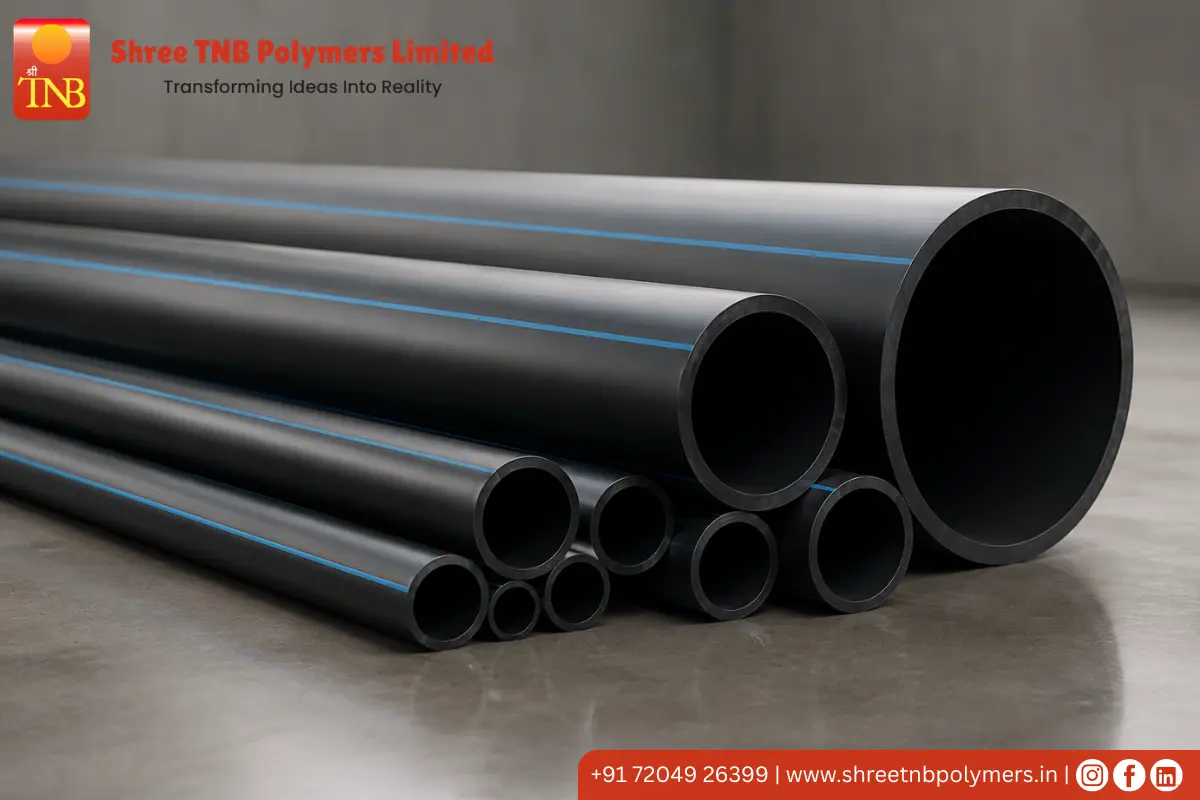
Selecting the right piping system is one of the most important decisions for any infrastructure, industrial, agricultural, or water management project. Whether you're planning a municipal water network, an irrigation system, or an industrial pipeline, choosing the right HDPE Pipes can improve efficiency, reduce maintenance costs, and ensure reliable performance for decades.
Today, High Density Polyethylene Pipes have become the preferred choice across industries because they are lightweight, corrosion-resistant, flexible, and highly durable. However, many buyers struggle to understand HDPE Pipe Sizes, HDPE Pipe Grades, pressure ratings, and material specifications before making a purchase.
This Complete Buyer's Guide to HDPE Pipes explains everything you need to know—from material grades and applications to selecting a trusted HDPE Pipe Manufacturer and HDPE Pipe Supplier for your project.
How to Choose the Right HDPE Pipe
The right HDPE pipe depends on your application's pressure requirements, operating environment, pipe size, and material grade.
Before you buy HDPE pipes, consider:
- The intended application
- Required pipe diameter
- SDR Rating
- PN Rating
- PE80 or PE100 material grade
- Installation conditions
- Industry standards and certifications
- Experience of the HDPE Pipe Manufacturer
Choosing a reliable HDPE Pipe Supplier ensures you receive high-quality products that deliver long-term performance.
What Are HDPE Pipes?
HDPE Pipes (High-Density Polyethylene Pipes) are thermoplastic piping systems manufactured using high-density polyethylene resin. They are designed to transport water, chemicals, gases, and other fluids safely while offering excellent resistance to corrosion, abrasion, and environmental stress.
Unlike traditional metal or concrete pipes, HDPE pipes do not rust, crack easily, or suffer from internal scaling. Their flexibility allows them to withstand ground movement, making them ideal for underground installations and challenging terrain.
Because of these advantages, HDPE Water Pipes are widely used in residential, commercial, agricultural, and industrial projects.
Why Are HDPE Pipes the Preferred Choice?
The growing demand for HDPE pipes is driven by their exceptional performance and low lifecycle costs.
Some of the key benefits include:
- Long service life of over 50 years under normal conditions
- Excellent chemical and corrosion resistance
- Leak-proof fusion joints
- Lightweight and easy to transport
- High flexibility and impact resistance
- Low maintenance requirements
- Smooth inner surface for efficient flow
- Environmentally friendly and recyclable
These benefits make HDPE pipes a smart investment for projects where durability and reliability are essential.
Understanding HDPE Pipe Grades
One of the first decisions buyers need to make is selecting the correct HDPE Pipe Grade.
The two most commonly used grades are PE80 HDPE Pipes and PE100 HDPE Pipes.
PE80 HDPE Pipes
PE80 is suitable for medium-pressure applications where cost-effectiveness and reliable performance are important.
Common applications include:
- Agricultural irrigation
- Rural water distribution
- Residential water supply
- Low-pressure industrial systems
PE80 offers good durability while remaining an economical choice for many projects.
PE100 HDPE Pipes
PE100 is a newer and stronger material designed for high-pressure applications.
Compared to PE80, PE100 provides:
- Higher tensile strength
- Better pressure resistance
- Superior crack resistance
- Longer service life
- Improved flow efficiency due to thinner pipe walls
Because of these advantages, PE100 HDPE Pipes are commonly used in municipal water supply, industrial plants, mining, infrastructure, and large-scale pipeline projects.
Difference Between PE80 and PE100 HDPE Pipes
The primary difference lies in their strength and pressure-handling capability. PE100 pipes can withstand higher operating pressures while using thinner walls, making them more efficient for demanding applications. PE80 is ideal for moderate-pressure systems, whereas PE100 is recommended for infrastructure and industrial projects that require maximum durability.
Understanding HDPE Pipe Sizes
Choosing the correct HDPE Pipe Size is just as important as selecting the right material grade.
HDPE pipes are available in a wide range of diameters to suit different flow requirements. Smaller sizes are commonly used in residential plumbing and irrigation systems, while larger diameters are preferred for municipal water supply, industrial processing, and infrastructure projects.
When selecting pipe sizes, consider:
- Flow rate
- Water demand
- Pump capacity
- Installation method
- Future expansion requirements
An experienced HDPE Pipe Manufacturing Company can help determine the most suitable size for your application, ensuring optimal performance without unnecessary costs.
Understanding SDR Rating and PN Rating
Many buyers come across terms like SDR Rating and PN Rating but are unsure of their meaning.
What is SDR Rating?
SDR (Standard Dimension Ratio) is the relationship between the pipe's outside diameter and wall thickness.
A lower SDR means thicker pipe walls and the ability to handle higher pressure, while a higher SDR indicates thinner walls suitable for lower-pressure applications.
Selecting the correct SDR Rating is essential for ensuring the pipe performs safely under operating conditions.
What is PN Rating?
PN (Pressure Nominal) Rating indicates the maximum pressure a pipe is designed to withstand during normal operation.
Common PN ratings include PN6, PN8, PN10, PN12.5, and PN16.
Your chosen SDR and PN ratings should always match the project's pressure requirements to ensure long-term reliability.
Common Applications of HDPE Pipes
One reason HDPE pipes are widely used is their versatility. They are suitable for a broad range of industries and applications.
Water Supply Projects
HDPE Pipe for Water Supply Projects is preferred because it offers leak-free joints, corrosion resistance, and long service life while maintaining water quality.
Agricultural Irrigation
Farmers use HDPE pipes for sprinkler systems, drip irrigation, and rain gun irrigation because they are flexible, durable, and resistant to weather conditions.
Industrial Applications
Industrial HDPE Pipes are used to transport chemicals, slurry, compressed air, and process water due to their excellent chemical resistance and strength.
Infrastructure Projects
Infrastructure Grade HDPE Pipes are widely used in municipal water distribution, drainage systems, sewage networks, cable protection, and underground utility installations.
Mining and Construction
HDPE pipes are also suitable for slurry transportation, dewatering systems, and construction projects where abrasion resistance and durability are essential.
HDPE Pipe Fittings: Why They Matter
A piping system is only as reliable as its fittings. HDPE Pipe Fittings are used to connect, branch, or change the direction of pipelines while maintaining a leak-proof system. Common fittings include elbows, tees, reducers, couplers, and end caps.
When purchasing fittings, ensure they are compatible with your selected HDPE Pipes, pressure rating, and installation method. Using high-quality fittings improves system performance and reduces the risk of leaks or failures.
How to Choose the Right HDPE Pipe Manufacturer
Choosing the right HDPE Pipe Manufacturer is just as important as selecting the right pipe grade. A trusted manufacturer ensures consistent quality, reliable performance, and compliance with industry standards.
Before finalizing your supplier, consider the following factors:
- Experience in manufacturing HDPE piping systems
- Use of premium PE80 and PE100 raw materials
- Compliance with relevant quality standards
- Advanced manufacturing and testing facilities
- Wide range of HDPE Pipe Sizes and pressure ratings
- Timely delivery and technical support
- Proven track record in infrastructure and industrial projects
Working with experienced HDPE Pipe Manufacturers helps reduce project risks and ensures long-term reliability.
How to Select a Reliable HDPE Pipe Supplier in India
If you're looking for a Reliable HDPE Pipe Supplier in India, don't base your decision on price alone. Evaluate the supplier's ability to deliver consistent quality, maintain inventory, and provide after-sales support.
A dependable HDPE Pipe Supplier should offer:
- A complete range of HDPE pipes and fittings
- Technical guidance for product selection
- Quality assurance and testing reports
- Prompt delivery schedules
- Custom solutions for specific project requirements
Building a long-term relationship with a trusted supplier can simplify procurement and improve project efficiency.
HDPE Pipe Buying Checklist
Before you buy HDPE pipes, make sure you check the following:
- Select the correct HDPE Pipe Grade (PE80 or PE100)
- Choose the right HDPE Pipe Size
- Verify the SDR Rating and PN Rating
- Match the pipe to your application
- Check product quality certifications
- Confirm compatibility with HDPE Pipe Fittings
- Review manufacturer experience
- Compare long-term value instead of only price
Following this checklist helps you invest in a piping system that delivers reliable performance for years.
Common Mistakes to Avoid
Many buyers make avoidable mistakes that increase maintenance costs and reduce the lifespan of their piping systems.
Some common mistakes include:
- Selecting pipes based only on price
- Ignoring pressure and flow requirements
- Choosing the wrong material grade
- Overlooking SDR and PN ratings
- Using incompatible fittings
- Purchasing from inexperienced suppliers
- Ignoring product certifications
Taking the time to evaluate these factors can save significant costs over the life of your project.
Why Choose Shree TNB?
At Shree TNB, we understand that every project has unique requirements. As an experienced HDPE Pipe Manufacturing Company, we manufacture high-quality piping solutions for water supply, irrigation, industrial, and infrastructure applications.
Our strengths include:
- Premium-quality PE100 HDPE Pipes and PE80 HDPE Pipes
- Wide range of HDPE Pipe Sizes
- Comprehensive range of HDPE Pipe Fittings
- Strict quality control and testing
- Reliable delivery across India
- Technical support for product selection
- Customer-focused service and long-term partnerships
Whether you need HDPE Water Pipes, Industrial HDPE Pipes, or Infrastructure Grade HDPE Pipes, our team is committed to delivering dependable solutions tailored to your requirements.
Conclusion
HDPE pipes have become the preferred choice for modern piping systems because they offer exceptional durability, flexibility, and long-term value. Understanding HDPE Pipe Grades, HDPE Pipe Sizes, SDR Rating, PN Rating, and the different HDPE Pipe Applications helps you make informed purchasing decisions.
When selecting a supplier, always choose an experienced High Density Polyethylene Pipe Manufacturer that prioritizes quality, compliance, and customer support. Investing in high-quality HDPE piping systems today can significantly reduce maintenance costs and improve operational efficiency in the future.
If you're planning to buy HDPE pipes for your next project, partner with Shree TNB for reliable products, expert guidance, and solutions designed to meet the demands of modern infrastructure, industrial, and agricultural applications.
Gallery
