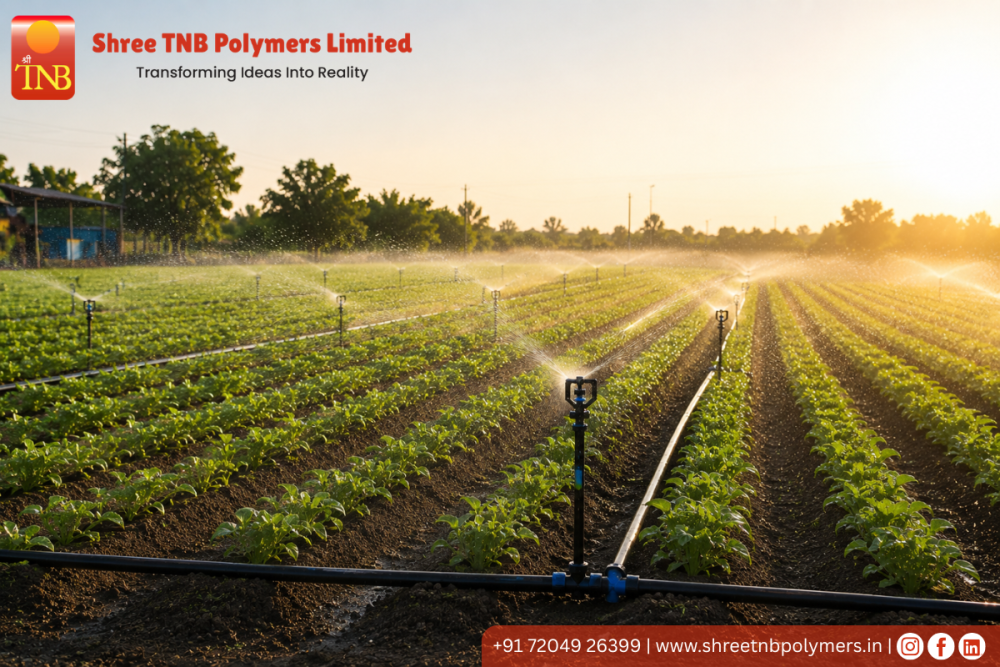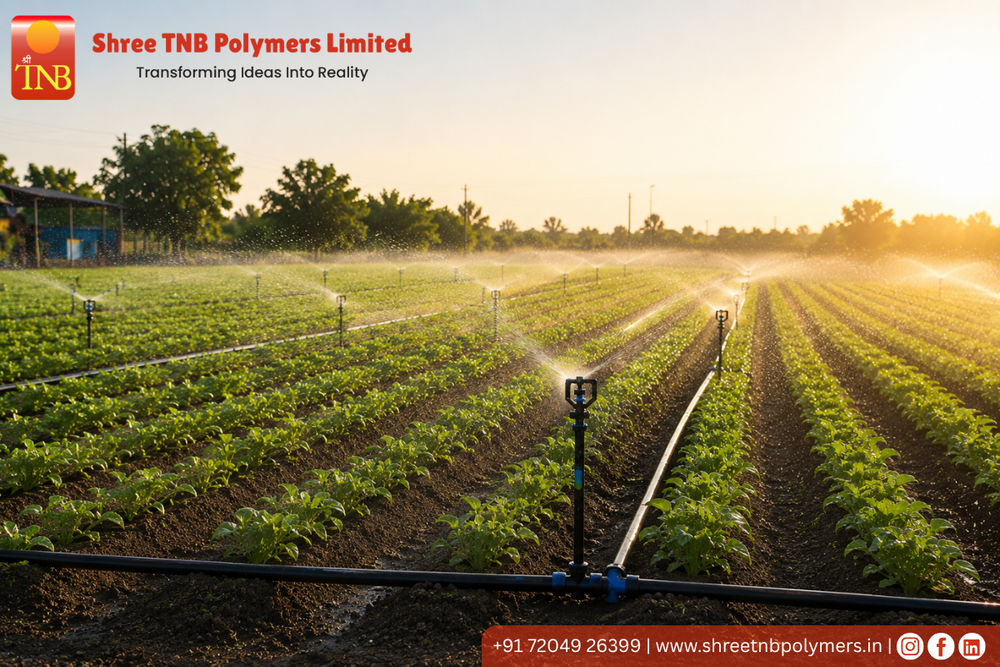
Efficient irrigation is not just about providing enough water to crops. It is equally important to ensure that water reaches the intended area as evenly as possible. When some parts of a field receive too much water while others remain relatively dry, crops can experience inconsistent growing conditions and inefficient water use.
A Micro Sprinkler System provides a practical way to distribute water across a controlled area around crops. Unlike point-based irrigation, micro sprinklers spread water through a defined spray pattern, making them suitable for orchards, nurseries, horticultural crops, vegetables, and several other agricultural applications.
However, simply installing micro sprinklers does not automatically guarantee uniform irrigation. Factors such as water pressure, flow rate, sprinkler spacing, field elevation, wind, filtration, and maintenance all influence the final performance of the system.
What Is a Micro Sprinkler System?
A Micro Sprinkler System is a type of Micro Irrigation System designed to distribute water over a localized area using small sprinklers.
Water travels through the irrigation pipeline and reaches individual sprinklers, which then disperse it through small droplets or streams. Depending on the design, the sprinkler can create a circular, semi-circular, or directional distribution pattern.
Micro sprinklers are commonly considered for:
- Orchards and fruit crops
- Nurseries
- Horticultural farms
- Vegetable cultivation
- Greenhouses
- Plantation crops
The appropriate system depends on the crop, soil conditions, plant spacing, climate, and available water.
How Does Micro Sprinkler Irrigation Work?
In Micro Sprinkler Irrigation, water moves from the source through the main irrigation pipeline and laterals before reaching the sprinkler.
The sprinkler then distributes water over its designated coverage area. This allows irrigation to reach a larger portion of the soil around a plant compared with a single point-source outlet.
A basic arrangement can be represented as:
Water Source → Pump → Filter → Main Pipeline → Laterals → Micro Sprinklers → Crop
The actual configuration can vary depending on the size and design of the agricultural irrigation system.
Why Is Uniform Water Distribution Important?
Uniform Water Distribution is an important part of effective irrigation because crops within the same field should receive water according to their actual requirements.
Poor distribution can create areas that receive excessive irrigation while other areas remain under-irrigated. This can make irrigation scheduling more difficult and may affect crop development.
Uneven irrigation can result in:
- Dry areas within the crop zone
- Excessive water application
- Uneven soil moisture
- Inconsistent crop growth
- Higher water consumption
Good Irrigation Uniformity does not mean every plant must receive exactly the same quantity of water. Instead, it means the irrigation system should provide a reasonably consistent application across the intended area while accounting for crop and field conditions.
How Micro Sprinklers Improve Water Distribution
1. Provide Wider Coverage Around Crops
One of the main advantages of Micro Sprinklers for Agriculture is their ability to distribute water over a wider localized area.
This can be especially useful for crops with root systems that extend beyond a single irrigation point. In an orchard, for example, a properly positioned micro sprinkler can wet the soil around a tree rather than concentrating water at only one location.
The required coverage should be selected according to the crop's root-zone requirements instead of simply choosing the sprinkler with the largest possible spray radius.
2. Create a Controlled Distribution Pattern
A Micro Sprinkler Irrigation System provides a defined water application pattern. Depending on the product, sprinklers may distribute water in circular, directional, or other patterns.
This gives irrigation designers greater flexibility when planning the system around:
- Crop and row spacing
- Plant size
- Required wetting area
- Soil characteristics
- Field layout
Correct sprinkler positioning is essential. If sprinklers are placed too far apart, dry areas may develop. If they are positioned too closely, excessive overlap can occur.
3. Support Better Root-Zone Coverage
Some crops require water across a relatively broad root zone. In such cases, point-source irrigation may not always provide the desired wetting pattern.
An Agricultural Micro Sprinkler can distribute water around the plant, helping cover a larger portion of the intended root zone.
This can be useful for:
- Fruit trees
- Orchards
- Nurseries
- Horticultural crops
- Plantation crops
The ideal wetting area will vary according to crop type, soil, plant age, and local conditions.
Applications of Micro Sprinkler Systems
Micro sprinklers are used across different agricultural applications because they can provide localized water distribution without requiring large-area conventional sprinklers.
Orchard Irrigation
Micro sprinklers are particularly useful for orchard irrigation because trees can develop wider root zones as they mature. Sprinklers can be positioned around individual trees to provide localized coverage.
As the trees grow, the irrigation arrangement may need to be adjusted to match their changing water requirements.
Nursery Irrigation
Nurseries often contain plants at different growth stages and require controlled water application.
A suitable Micro Sprinkler System for Agriculture can provide water across plant beds or around individual plants depending on the nursery layout.
Horticulture
Micro sprinklers can also be used for fruit, vegetable, flower, and other horticultural crops where a broader localized wetting area is beneficial.
Factors That Affect Irrigation Uniformity
The performance of a micro sprinkler depends on the complete irrigation system, not just the sprinkler itself.
Water Pressure
Pressure directly affects the sprinkler's flow and distribution pattern. If the available pressure is too low, the sprinkler may not achieve its intended coverage.
Flow Rate
The flow rate of each sprinkler should be compatible with the available water supply and the hydraulic design of the irrigation network.
Sprinkler Spacing
Spacing has a major influence on uniformity. Excessive spacing can leave dry areas, while unnecessary overlap can increase water application.
Field Elevation
Changes in field elevation can create pressure differences across the irrigation network, which may affect sprinkler performance.
Wind Conditions
Wind can change the movement of water droplets and influence the actual distribution pattern, particularly in exposed agricultural fields.
Water Quality
Irrigation water may contain soil particles, sand, organic matter, or other debris. Without appropriate filtration, these materials can affect sprinkler outlets and reduce performance.
Micro Sprinkler vs Drip Irrigation
Both micro sprinklers and drip systems are forms of Micro Irrigation, but their water application methods are different.
A drip irrigation system generally delivers water through emitters at specific points along the lateral. A micro sprinkler distributes water across a localized area.
Micro sprinklers may be suitable when:
- A wider wetting area is required
- Crops have broader root zones
- Orchard trees need localized coverage
- Nursery plants require broader application
Drip irrigation may be suitable when:
- Point-source irrigation is preferred
- Water needs to be delivered close to the root zone
- Row crops require controlled application
- Highly localized irrigation is required
Neither system is universally better. The right choice depends on the crop, soil, climate, water availability, and farm layout.
How to Choose the Right Micro Sprinkler
Before you Buy Micro Sprinklers, consider the requirements of the entire irrigation system.
Important factors include:
- Crop type: Understand the crop's water and root-zone requirements.
- Coverage: Determine how much area each sprinkler needs to irrigate.
- Flow rate: Ensure the available water supply can support the required number of sprinklers.
- Operating pressure: Match the sprinkler with the pressure available in the system.
- Spacing: Plan sprinkler positions according to the actual distribution pattern.
- Water quality: Consider appropriate filtration to protect the sprinkler outlets.
Selecting a sprinkler based only on price or maximum coverage can result in poor irrigation performance.
Installation and Maintenance
Correct installation is essential for maintaining consistent Water Distribution. Sprinklers should be positioned according to crop spacing, required coverage, and the manufacturer's recommendations.
The irrigation pipeline should also be designed to provide suitable flow and pressure throughout the system.
Regular maintenance should include checking for:
- Blocked sprinkler outlets
- Damaged sprinkler heads
- Leakage
- Uneven spray patterns
- Pressure changes
- Sediment accumulation
Proper filtration and periodic flushing can help maintain the performance of the irrigation network.
Common Mistakes to Avoid
Farmers should avoid treating the sprinkler as an independent component. Its performance depends on how well the complete irrigation system is designed.
Some common mistakes include:
- Installing sprinklers too far apart
- Ignoring operating pressure
- Choosing an unsuitable flow rate
- Failing to account for field elevation
- Neglecting water filtration
- Ignoring wind conditions
- Not cleaning blocked sprinkler outlets
- Choosing equipment only on the basis of price
A properly planned system considers these factors together.
Choosing a Micro Sprinkler Manufacturer or Supplier
When selecting a Micro Sprinkler Manufacturer or Micro Sprinkler Supplier, product price should not be the only consideration.
A reliable supplier should provide clear information about:
- Flow rate
- Operating pressure
- Distribution pattern
- Product material
- Recommended applications
- Installation requirements
- Maintenance procedures
For larger agricultural projects, technical guidance can also be valuable because the sprinkler needs to work efficiently with the complete irrigation network.
Conclusion
A Micro Sprinkler System can be an effective solution for distributing water across a localized area around crops. Its controlled spray pattern makes it useful for orchards, nurseries, horticultural farms, and other agricultural applications.
However, uniform water distribution depends on more than the sprinkler itself. Pressure, flow rate, sprinkler spacing, filtration, field elevation, wind, pipeline design, and maintenance all influence the final irrigation pattern.
Before selecting a micro sprinkler, farmers should evaluate the crop, required coverage, available water, operating pressure, soil conditions, and overall irrigation layout.
When these factors are properly considered, Micro Sprinkler Irrigation can support consistent water application, better crop water management, and more efficient use of irrigation resources.
Gallery