Water is one of the most important resources in agriculture, and proper irrigation plays a major role in maintaining healthy crop growth and improving farm productivity. Today, farmers are facing increasing water shortages due to changing climate conditions and rising agricultural demands. Traditional irrigation methods often lead to excessive water loss through runoff, evaporation, and uneven water distribution. Because of this, modern farmers are shifting toward smarter and more sustainable solutions like sprinkler irrigation systems that help conserve water while improving irrigation efficiency.
At Shree TNB, we provide advanced irrigation solutions designed to support modern farming practices and sustainable agriculture. Our sprinkler irrigation systems help farmers achieve uniform water distribution, better soil moisture management, and reduced water wastage across agricultural fields. If you want to understand more about their working process and applications, you can also explore our detailed guide on Sprinkler Irrigation Systems, where we explain how modern irrigation technology helps improve crop productivity while saving valuable water resources.
What Is Sprinkler Irrigation?
Many farmers and landowners often ask, What is Sprinkler Irrigation?
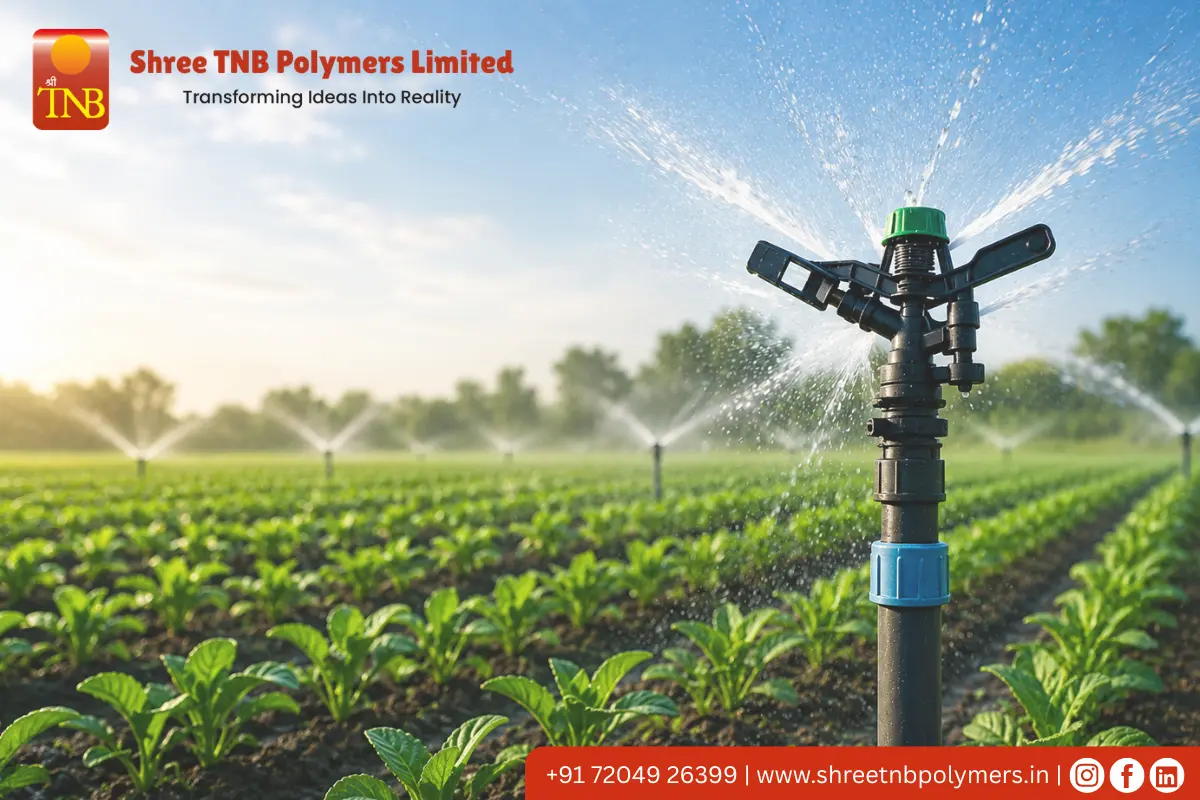
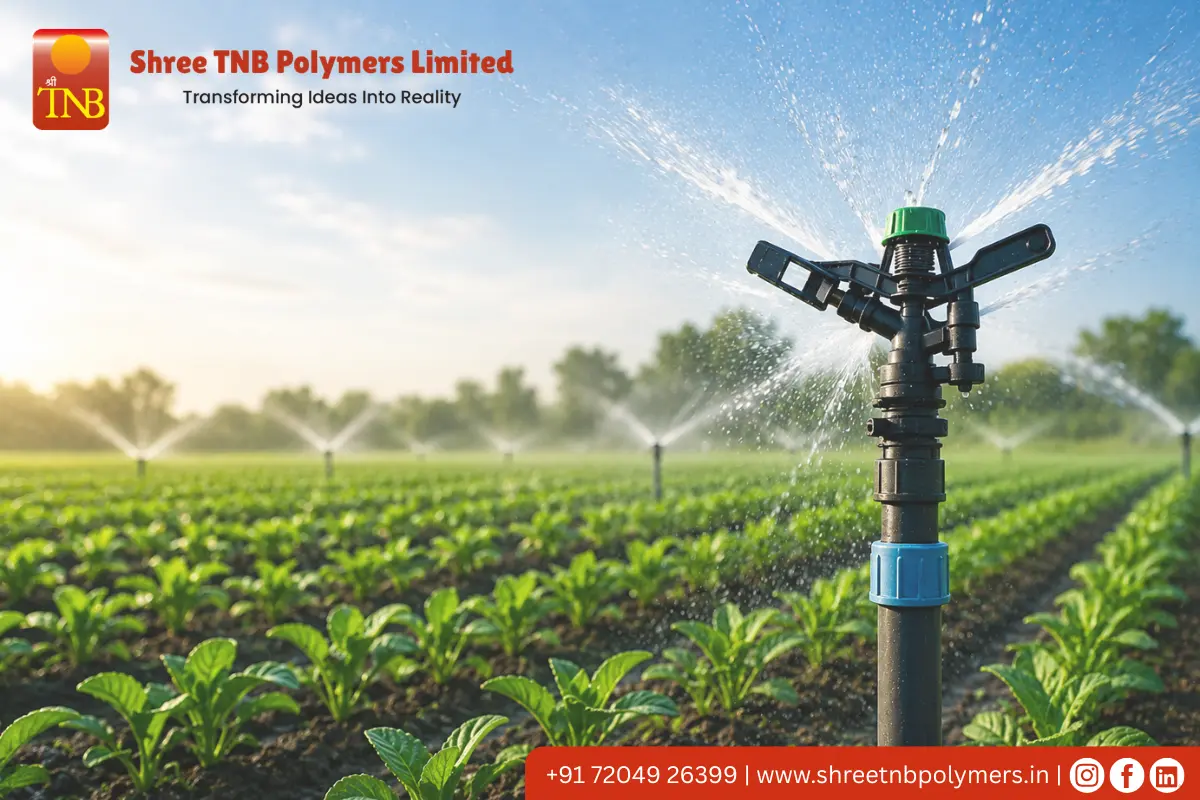
Sprinkler irrigation is a modern irrigation method where water is sprayed over crops through rotating sprinkler heads, creating an effect similar to natural rainfall. This system ensures crops receive balanced moisture without flooding the entire field.
A standard agriculture irrigation system generally includes:
- Water pump
- Main pipelines
- Sprinkler heads
- Control valves
- Water pressure system
Water moves through pipelines and is sprayed evenly over crops in the form of fine droplets. This controlled watering process helps maintain healthy soil moisture while reducing water wastage.
Why Farmers Prefer Sprinkler Systems
Farmers are increasingly adopting sprinkler systems because they:
- Save water efficiently
- Reduce labor requirements
- Improve crop growth
- Support modern farming practices
- Work effectively on uneven land
- Reduce soil erosion
- Improve nutrient absorption
This is why sprinkler irrigation is considered one of the most effective modern irrigation techniques in agriculture today.
How Sprinkler Irrigation Works
Understanding How Sprinkler Irrigation Works helps farmers use the system more effectively and improve water management.
The process is simple:
- Water is pumped through pipelines.
- Sprinkler heads rotate under pressure.
- Water sprays evenly across crops.
- Soil absorbs moisture gradually.
This method creates uniform water distribution, ensuring every plant receives nearly the same amount of water. Balanced irrigation is important because uneven watering can negatively affect plant growth and crop quality.
The sprinkler head breaks water into small droplets, allowing better absorption into the soil. This helps improve soil moisture management while reducing surface runoff and water loss.
Real Farming Experience
Many farmers notice that crops irrigated through sprinklers grow more evenly compared to traditional irrigation methods. Since water reaches all sections of the field properly, plants develop stronger roots and healthier growth patterns.
Farmers also report:
- Better crop consistency
- Improved plant health
- Lower labor costs
- Reduced water bills
- Easier farm management
Modern farms often combine sprinkler systems with timers and moisture sensors for better automation. This approach supports precision farming, where water is supplied only when needed.
Benefits of Sprinkler Irrigation in Agriculture
There are several important benefits of sprinkler irrigation in agriculture that make it highly valuable for modern farming.
Better Water Conservation
One of the biggest advantages of sprinkler systems is efficient water usage. Water is sprayed only where needed instead of flooding the entire field.
This helps improve:
- Water conservation
- Irrigation efficiency
- Soil moisture balance
- Crop health
Farmers can save significant amounts of water compared to traditional irrigation methods.
Reduced Water Wastage
Traditional irrigation methods often waste water through:
- Overflow
- Surface runoff
- Deep seepage
- High evaporation
Sprinkler systems reduce these problems by applying water slowly and evenly across the field.
Ways Sprinklers Help Save Water
- Controlled water flow
- Targeted irrigation
- Reduced evaporation loss
- Better water absorption
- Lower runoff generation
- Improved moisture control
This helps farmers reduce water wastage while maintaining healthy crop growth.
Improved Crop Productivity
Healthy crops require balanced watering throughout every growth stage. Sprinkler irrigation helps maintain proper moisture levels, allowing plants to absorb nutrients more effectively.
This improves:
- Crop growth
- Plant strength
- Root development
- Agricultural productivity
Proper irrigation also reduces water stress in crops, especially during dry seasons.
Suitable for Different Soil Types
Sprinkler systems work efficiently on:
- Sandy soil
- Uneven land
- Sloped farms
- Medium soil
- Light soil types
Since water is delivered gradually, the soil absorbs moisture more effectively without becoming waterlogged.
Smart Irrigation and Modern Farming
Modern agriculture is becoming increasingly technology-driven. Many farms now use a smart irrigation system that combines sprinklers with automation tools.
Smart Features Include
- Automatic timers
- Moisture sensors
- Weather-based controls
- Mobile monitoring systems
- Pressure management systems
These technologies improve agricultural water management by preventing unnecessary watering and improving irrigation scheduling.
Real-World Experience
Farmers using automated sprinkler systems often report:
- Lower electricity bills
- Reduced labor costs
- Better crop consistency
- Easier irrigation management
- Improved farm productivity
These systems are especially useful in regions facing water shortages.
Sprinkler Irrigation vs Traditional Irrigation
The comparison between Sprinkler Irrigation vs Traditional Irrigation clearly shows why farmers are moving toward modern irrigation systems.
Challenges of Traditional Irrigation
Traditional irrigation methods often:
- Use excessive water
- Cause uneven watering
- Increase soil erosion
- Require more labor
- Lead to higher evaporation losses
Advantages of Sprinkler Irrigation
Sprinkler systems provide:
- Better irrigation control
- Uniform water distribution
- Reduced water wastage
- Lower labor requirements
- Better crop growth
- Improved moisture balance
Because of these advantages, many experts consider sprinkler irrigation one of the best irrigation methods for water conservation in agriculture. It is also considered one of the more eco-friendly farming methods because it helps protect natural water resources.
Best Crops for Sprinkler Irrigation
Choosing the right crops is important for getting the best results from sprinkler systems.
Best Crops for Sprinkler Irrigation
- Wheat
- Maize
- Pulses
- Potatoes
- Onion
- Carrot
- Leafy vegetables
- Fodder crops
These crops benefit from controlled watering and balanced moisture supply. Sprinkler systems are especially useful for large agricultural fields where even watering is necessary for healthy crop production.
Why Farmers Prefer Modern Irrigation Systems
Today’s farmers want irrigation systems that improve productivity while saving resources. This is one reason why modern irrigation systems are becoming more popular.
Main Reasons Farmers Prefer Modern Systems
- Faster irrigation process
- Better water control
- Reduced labor dependency
- Higher crop yield
- Lower long-term costs
- Easier automation
- Improved water management
Modern systems also support sustainable irrigation methods, helping farms remain productive while conserving water for the future.
Drip vs Sprinkler Irrigation
The discussion around Drip vs Sprinkler Irrigation is common because both systems help improve water efficiency.
Drip Irrigation Is Best For
- Fruit orchards
- Row crops
- Water-sensitive plants
- Targeted root watering
Sprinkler Irrigation Is Best For
- Large agricultural fields
- Vegetable farming
- Cereal crops
- Fodder crops
- Wide-area irrigation
Both methods improve irrigation for farming, but the right choice depends on:
- Crop type
- Farm size
- Soil condition
- Water availability
- Budget
Importance of Irrigation in Agriculture
The importance of irrigation in agriculture continues to grow due to changing climate conditions and increasing food demand.
Without proper irrigation:
- Crops may dry out
- Growth becomes uneven
- Production decreases
- Soil quality may decline
- Nutrient absorption weakens
An efficient irrigation system helps maintain healthy crops while improving agricultural productivity and long-term farm sustainability. Farmers today are increasingly adopting modern technologies to meet growing agricultural demands while protecting natural resources.
Conclusion
Sprinkler irrigation has become one of the most effective solutions for modern agriculture. It helps farmers save water, improve crop growth, and manage irrigation more efficiently.
By reducing runoff, minimizing evaporation loss, and providing controlled watering, sprinkler systems support sustainable farming and better water conservation.
As agriculture continues to evolve, modern irrigation technologies will play an important role in ensuring food security and responsible water usage. For farmers looking to improve efficiency while conserving resources, sprinkler irrigation remains one of the most practical and reliable solutions available today.
Get a Quote
Looking for a reliable sprinkler irrigation solution for your farm? Contact us today for efficient and water-saving irrigation systems tailored to your agricultural needs.
- Customized irrigation solutions
- Quality irrigation products
- Expert support and guidance
Contact us now to get a quote.
Gallery