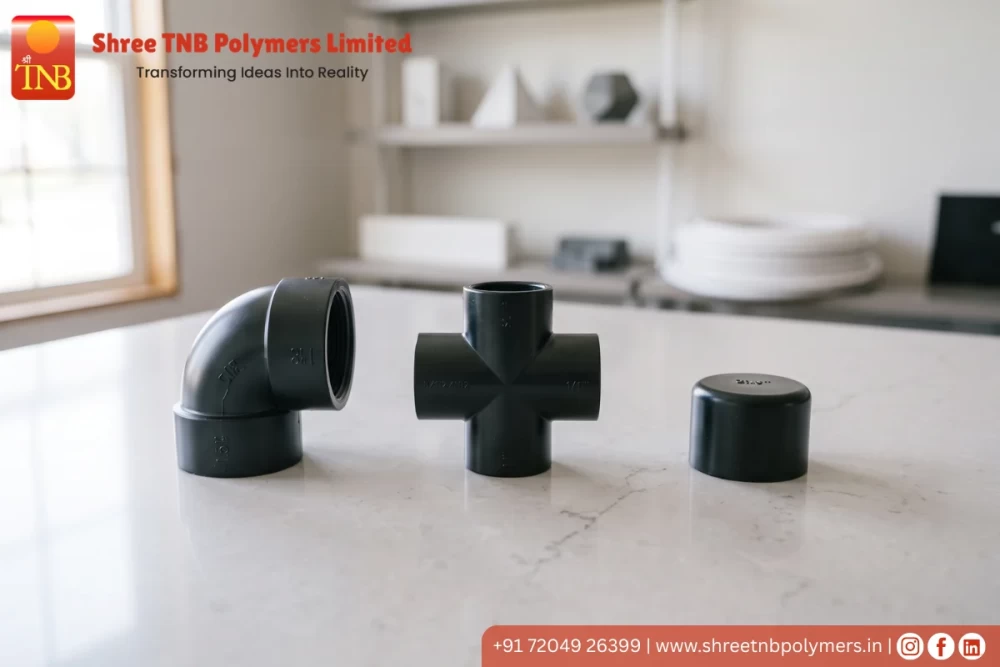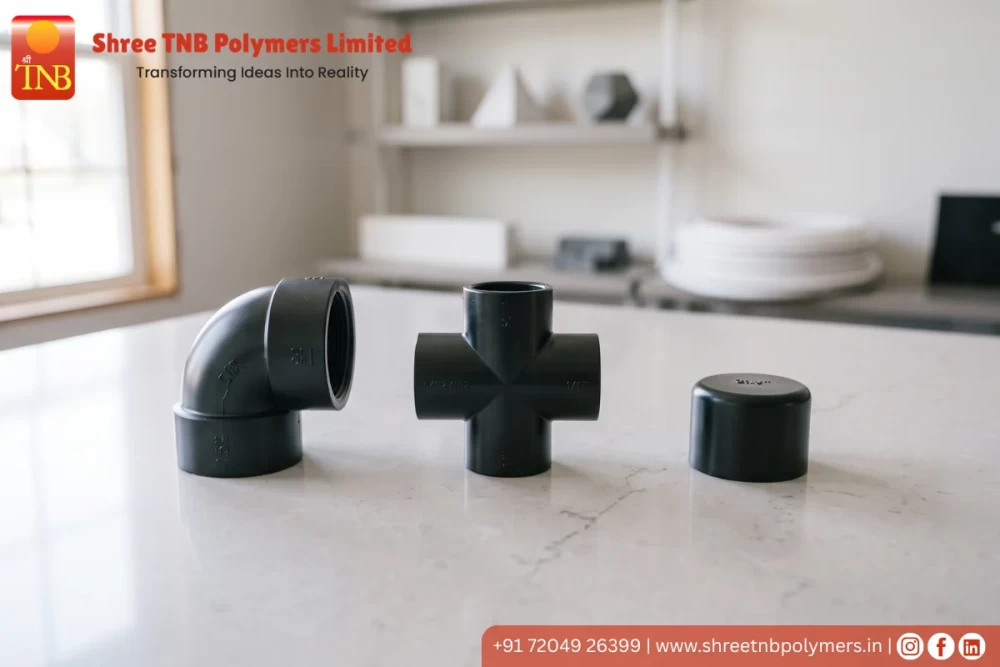
A reliable piping system needs more than just good-quality pipes. PVC Pipe Fittings play an equally important role in connecting pipes, changing flow direction, creating branches, and building an efficient pipeline network.
PVC fittings are widely used across water supply, irrigation, agriculture, plumbing, and other piping applications because they are lightweight, easy to handle, and suitable for a wide range of installations.
However, choosing the right fitting is not simply about picking a component that fits the pipe. The connection type, application, water flow requirements, operating conditions, and overall piping design all need to be considered.
In this guide, we explain the most commonly used PVC fitting types, where they are used, and what to consider when selecting them for a piping or irrigation system.
What Are PVC Pipe Fittings?
PVC Pipe Fittings are components used to connect PVC pipes and create different configurations within a piping system.
Depending on their design, fittings can help:
- Connect two pipe sections
- Change the direction of water flow
- Create branches from a main pipeline
- Close the end of a pipeline
- Connect different sections of an irrigation network
Because different piping layouts require different connections, PVC fittings are available in several designs. For agricultural and irrigation applications, selecting compatible fittings is particularly important because leaks or poorly fitted connections can affect water distribution and overall system efficiency.
Common Types of PVC Pipe Fittings
While there are many fitting designs available for different piping requirements, a few basic types are especially useful in water and irrigation applications.
1. PVC Elbow
A PVC Elbow is used when a pipeline needs to change direction.
Instead of forcing a pipe to bend, an elbow creates a controlled turn while maintaining a proper connection between pipe sections.
PVC elbows are commonly used in:
- Agricultural irrigation systems
- Water supply pipelines
- Plumbing installations
- Pipeline networks
- General water distribution applications
The fitting helps create a cleaner and more organized pipeline layout, particularly where the pipe needs to turn around structures or follow the shape of a field.
2. PVC Tee
A PVC Tee is designed to create a branch from a main pipeline.
This makes it useful when water needs to be distributed from one main line into separate sections.
For example, in an agricultural irrigation system, a tee can connect a main pipeline to another branch supplying a different part of the field.
PVC tees are commonly used for:
- Irrigation networks
- Agricultural water distribution
- Plumbing systems
- Branch pipelines
- Water supply applications
The correct tee configuration should be selected according to the overall pipeline design and connection requirements.
3. PVC Joiner / Coupler
A PVC Joiner, also known as a coupler in general piping terminology, is used to connect two compatible pipe sections.
It is particularly useful when:
- Extending a pipeline
- Connecting separate pipe sections
- Repairing a pipeline
- Building longer irrigation networks
- Replacing damaged sections
A properly fitted joiner creates a secure connection while helping maintain continuous water flow through the pipeline.
For irrigation applications, reliable joining is important because loose or poorly matched connections can result in leakage and unnecessary water loss.
4. PVC End Cap
A PVC End Cap is used to close the end of a pipeline.
It can be useful when a pipeline:
- Reaches its endpoint
- Needs to be temporarily closed
- Requires isolation during maintenance
- Is designed for future expansion
In irrigation networks, end caps can also help close sections of a pipeline where water is not intended to continue beyond that point.
Where Are PVC Pipe Fittings Used?
The versatility of PVC piping makes these fittings suitable for several applications.
Agricultural Irrigation
In agricultural irrigation systems, PVC Pipe Fittings help create connections between different pipeline sections and distribute water across the farm.
They can be used alongside pipes, valves, filters, pumps, and other irrigation components to create a complete irrigation network.
Water Supply
PVC fittings are also used in water distribution systems where pipes need to be connected, redirected, branched, or terminated.
Plumbing
In plumbing applications, fittings help route pipelines through buildings and connect different sections of the water distribution network.
Horticulture and Nursery Irrigation
Nurseries and horticultural farms often require flexible water distribution layouts. PVC fittings make it easier to create and modify these networks according to irrigation requirements.
Why Quality Matters in PVC Pipe Fittings
A fitting may be small compared with the overall pipeline, but its performance can directly affect the reliability of the system.
Poor-quality or incompatible fittings can contribute to:
- Leakage
- Weak connections
- Unstable pipeline performance
- Increased maintenance
- Water wastage
For this reason, buyers should look beyond price and consider material quality, manufacturing consistency, connection compatibility, and application requirements.
Benefits of Using PVC Pipe Fittings
The performance of a piping system depends heavily on the quality and compatibility of its connections. Well-designed PVC Pipe Fittings offer several practical advantages for irrigation, water supply, plumbing, and other applications.
1. Lightweight and Easy to Handle
PVC fittings are relatively lightweight compared with many conventional piping materials. This makes transportation, handling, and installation easier, particularly when working across agricultural fields or large piping networks.
2. Resistant to Corrosion
PVC does not rust like conventional metal piping materials. This makes PVC fittings suitable for applications where they are regularly exposed to water and moisture.
For irrigation systems, this can help reduce maintenance requirements and support longer-lasting pipeline installations.
3. Simple Installation
Many PVC connections can be installed without complex equipment. When compatible joining methods are used correctly, installation can be relatively straightforward.
This is particularly useful when creating or modifying Agricultural Irrigation Systems, where pipelines may need to be routed across different sections of a farm.
4. Supports Efficient Water Distribution
Properly selected fittings help maintain a continuous and organized pipeline. Elbows, tees, joiners, and end caps each perform a specific function, allowing water to be directed where it is required.
How to Choose the Right PVC Pipe Fittings
Choosing a fitting should start with the application rather than simply the product name.
Consider these factors before purchasing:
Application
Determine whether the fittings will be used for:
- Agricultural irrigation
- Water supply
- Plumbing
- Nursery irrigation
- Horticultural applications
- General water distribution
The operating environment can influence which type of fitting is appropriate.
Pipe Compatibility
The fitting should be compatible with the PVC pipe and connection method being used. A fitting that does not properly match the pipe can result in leakage or an unreliable connection.
Pipeline Layout
Consider how the pipeline needs to be routed.
For example:
- Use an Elbow when the pipeline needs to change direction.
- Use a Tee when a branch is required.
- Use a Joiner or Coupler to connect compatible pipe sections.
- Use an End Cap when the pipeline needs to be closed.
This simple approach helps ensure that each component has a clear purpose within the system.
Operating Conditions
Water pressure, temperature, flow requirements, and environmental conditions should also be considered before selecting PVC Piping Fittings.
For demanding applications, buyers should confirm that the selected fitting is appropriate for the intended operating conditions.
PVC Pipe Fittings for Irrigation Systems
Agricultural irrigation requires dependable water distribution across different areas of a farm. A properly designed pipeline network helps deliver water efficiently while reducing unnecessary leakage and maintenance.
PVC Irrigation Pipe Fittings can be used to create and modify these networks.
For example, a main irrigation pipeline may use tees to create branches, elbows to change direction, joiners to connect pipe sections, and end caps to close specific sections.
These fittings can work alongside other Irrigation System Components, including:
- Irrigation pipes
- Valves
- Filters
- Pumps
- Drippers
- Sprinklers
The result is a more organized irrigation network that can be adapted to the layout and requirements of the farm.
PVC Pipe Fittings for Water Supply and Plumbing
PVC fittings are also useful beyond agriculture.
In water supply applications, fittings help create continuous distribution networks and route pipes around structures or equipment.
In plumbing systems, they can be used to:
- Change pipeline direction
- Create branch connections
- Join pipe sections
- Close unused pipeline ends
Their lightweight construction and resistance to corrosion make PVC a practical option for many water-related installations, provided the material and fitting are suitable for the specific application.
Installation and Maintenance Considerations
Correct installation is just as important as selecting a good-quality fitting.
Before installation, check that the pipe and fitting surfaces are clean and compatible. Follow the recommended joining procedure for the particular PVC system rather than improvising the connection.
After installation, inspect the network for:
- Leakage
- Loose connections
- Damaged fittings
- Unusual pressure changes
- Poor water flow
Periodic inspection is especially important in agricultural applications because irrigation pipelines may be exposed to soil, machinery, weather, and frequent operational changes. Promptly replacing damaged components can help prevent a small connection problem from affecting a larger section of the irrigation network.
Common Mistakes to Avoid When Buying PVC Pipe Fittings
Choosing the cheapest fitting is not always the most economical decision. A poor-quality connection can increase maintenance and replacement costs over time.
Avoid these common mistakes:
- Selecting fittings without checking pipe compatibility
- Ignoring the intended application
- Mixing incompatible connection systems
- Choosing fittings solely on price
- Neglecting operating pressure requirements
- Using damaged fittings during installation
- Failing to inspect connections after installation
Instead, focus on quality, compatibility, application requirements, and supplier reliability.
How to Choose a PVC Pipe Fittings Supplier
When purchasing PVC Pipe Fittings, the supplier's reliability matters just as much as the product itself.
Before selecting a PVC Pipe Fittings Supplier, consider:
- Product quality and consistency
- Manufacturing standards
- Application suitability
- Technical assistance
- Product availability
- Customer support
- Industry experience
If you are sourcing fittings for agricultural applications, it is particularly useful to work with a supplier that understands irrigation systems rather than simply selling individual components. A reliable PVC Pipe Fittings Manufacturer or supplier should be able to help buyers select fittings according to their piping requirements instead of recommending products based only on price.
Why PVC Pipe Fittings Matter in Modern Piping Systems
PVC pipes provide the main pathway for water, but fittings determine how that pathway is configured.
The right combination of PVC Elbows, PVC Tees, PVC Joiners, and PVC End Caps can help create an organized and functional piping network for irrigation, water supply, plumbing, and other applications.
Conclusion
PVC Pipe Fittings are essential components for building reliable and adaptable piping systems. From changing the direction of a pipeline with an elbow to creating branches with a tee, joining sections with a coupler, or closing a line with an end cap, each fitting serves a specific purpose.
For irrigation and agricultural applications, choosing fittings based on application, pipe compatibility, operating conditions, and product quality is more important than simply selecting the lowest-priced option.
A well-designed piping system combines suitable pipes with compatible fittings and other essential components to achieve reliable water distribution and long-term performance.
When sourcing PVC Pipe Fittings, choose a dependable supplier that can provide consistent product quality and understands the requirements of your particular application.
Gallery