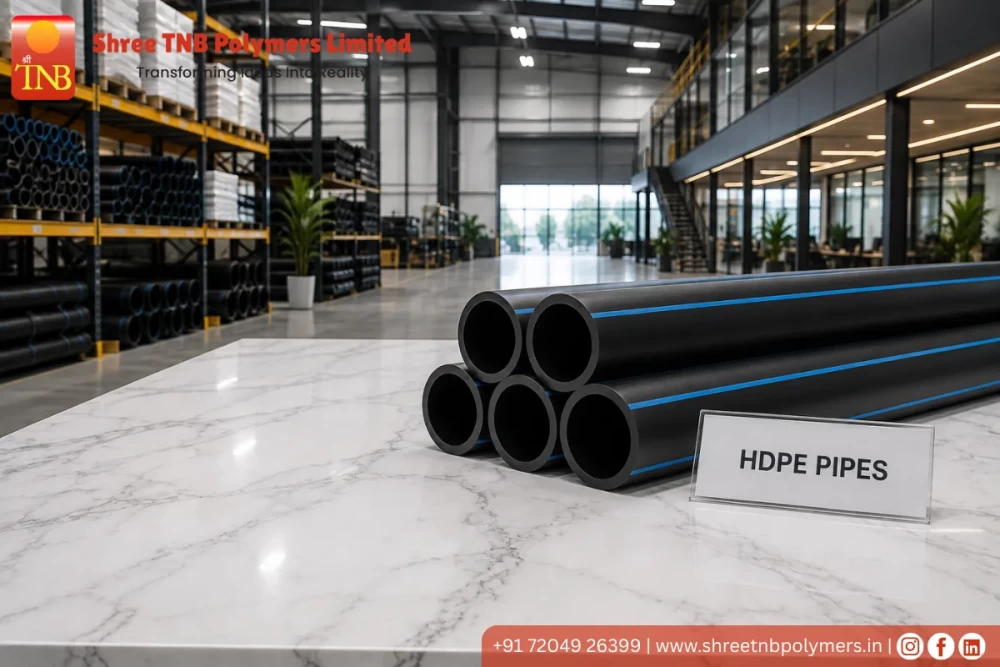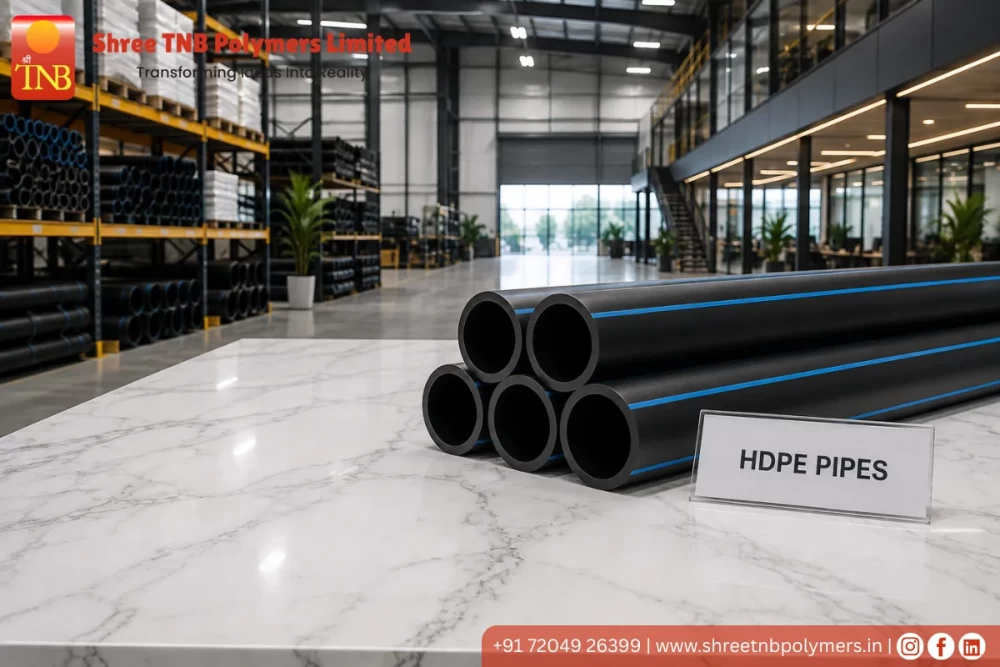
Long-term water infrastructure requires piping systems that can deliver reliable performance for many years. Once installed underground, replacing a pipeline can be expensive, disruptive, and time-consuming.
This is why material selection is an important part of water infrastructure planning. HDPE Pipes are widely considered for water supply and distribution projects because they offer flexibility, corrosion resistance, durability, and reliable joining characteristics.
However, choosing HDPE is not simply about selecting a pipe material. The grade, diameter, pressure requirements, installation method, and project conditions all need to be considered.
What Makes HDPE Pipes Suitable for Water Infrastructure?
HDPE, or High-Density Polyethylene, is a thermoplastic material used in a wide range of piping applications.
Its combination of flexibility and toughness makes it suitable for many underground water systems. Unlike conventional metallic pipes, HDPE does not rust, which can help reduce corrosion-related concerns.
Another important advantage is its ability to be joined through fusion techniques. Properly executed fusion joints can create a continuous pipeline with strong connections between pipe sections.
For long-term projects, these characteristics can contribute to dependable water transportation when the system is correctly designed and installed.
1. Excellent Resistance to Corrosion
Corrosion is one of the major challenges associated with some traditional metallic piping systems.
HDPE Water Pipes are naturally resistant to corrosion and do not rust like steel or iron pipes. This makes them particularly useful for underground applications where pipes may remain exposed to soil and moisture for long periods.
The absence of conventional rusting can reduce certain maintenance concerns over the pipeline's service life.
However, HDPE should still be selected according to the actual application. Temperature, pressure, water chemistry, and surrounding conditions should be evaluated before installation.
2. Flexibility Helps in Underground Applications
Water infrastructure is not always installed across perfectly level or stable ground. Underground pipelines may encounter changes in terrain, ground movement, or areas where the pipeline needs to follow a particular route.
HDPE has greater flexibility than many rigid piping materials. This allows properly designed HDPE pipelines to accommodate certain movements and bends.
This characteristic can be especially useful for Underground Water Pipelines, where flexibility can simplify routing and help the system adapt to certain site conditions.
Proper trench preparation, bedding, alignment, and backfilling are still essential. Flexibility does not eliminate the need for correct installation practices.
3. Reliable Fusion Jointing
The quality of pipe joints plays an important role in the performance of any water pipeline.
HDPE pipes can commonly be joined using butt fusion or electrofusion. These methods use controlled heat to join compatible HDPE components.
When the process is performed correctly, the resulting joint can provide a strong connection between pipe sections.
Butt Fusion
Butt fusion involves heating the prepared ends of two compatible HDPE pipes and bringing them together under controlled pressure.
Proper alignment, heating, pressure, and cooling are important for achieving a reliable joint.
Electrofusion
Electrofusion uses fittings containing embedded heating elements. The fitting and pipe are heated to create a connection between the components.
This method can be useful in certain installation situations where conventional butt fusion may be less practical.
4. Good Impact Resistance
Water infrastructure pipes need to withstand more than operating pressure. They may also experience handling forces during transportation, installation, and construction.
HDPE offers good toughness and impact resistance, which can be useful in demanding installation environments.
Its ability to tolerate certain external stresses makes it suitable for a variety of water infrastructure projects.
Nevertheless, proper handling is essential. Pipes should be stored, transported, lifted, and installed according to appropriate procedures to avoid unnecessary damage.
5. Supports Long-Term Performance
A major consideration in infrastructure planning is the expected service life of the system.
Replacing an underground pipeline can involve excavation, labour, transportation, traffic disruption, and significant project costs. Therefore, selecting a material with suitable long-term performance characteristics is important.
The combination of HDPE Pipe Durability, corrosion resistance, flexibility, and fusion jointing can make HDPE a practical option for long-term water infrastructure.
6. Suitable for Different Water Applications
HDPE pipes are used in a variety of water transportation applications.
Depending on the pipe specifications and applicable standards, these may include:
- Municipal water distribution
- Rural water supply
- Underground water pipelines
- Agricultural water transportation
- Water treatment systems
- Industrial water networks
For potable-water applications, buyers should verify that the specific pipe and material meet the required drinking-water standards and approvals.
7. Choosing the Correct HDPE Pipe Grade and Size
Not every HDPE pipe is suitable for every water infrastructure project.
Two commonly encountered material classifications are PE80 and PE100. The appropriate choice depends on the project's pressure requirements, pipe dimensions, design conditions, applicable standards, and expected service environment.
Pipe diameter is equally important.
A pipeline carrying a high volume of water may require a larger diameter than a smaller distribution line. Selecting the wrong size can affect flow performance and system efficiency.
Important Selection Factors
Before purchasing, consider:
- Required flow rate
- Operating pressure
- Pipe diameter
- Material grade
- Pipeline length
- Installation conditions
- Applicable standards
- Expected operating conditions
A qualified engineer or technical supplier should be consulted when project requirements are complex.
8. Installation Quality Is Critical
Even a high-quality pipe can perform poorly if installation is not carried out correctly.
HDPE Pipe Installation requires attention to trench conditions, pipe handling, alignment, joint preparation, fusion parameters, backfilling, and system testing.
For underground pipelines, the surrounding soil and installation environment should be considered during project planning.
Fusion equipment should also be suitable for the pipe and maintained properly. Operators should follow established procedures and the manufacturer's recommendations.
In simple terms, choosing the right pipe is only one part of building a reliable pipeline. Correct installation is equally important.
HDPE Pipes vs Traditional Water Piping
HDPE offers several characteristics that can make it attractive compared with conventional piping materials.
Its corrosion resistance can be an advantage over metallic pipes in suitable environments. Its flexibility can also provide benefits where rigid piping may be less adaptable.
However, HDPE should not automatically be considered the best material for every project.
The final choice should consider:
- Operating pressure
- Project location
- Installation method
- Water quality
- Required service conditions
- Initial cost
- Installation cost
- Expected lifecycle
- Applicable standards
A proper comparison should focus on the complete system rather than one material property.
Why Lifecycle Cost Matters
The initial purchase price is only one part of the cost of a water infrastructure project.
A pipeline can also involve installation, maintenance, repairs, excavation, replacement, and operational expenses.
Because HDPE can offer corrosion resistance, flexibility, and reliable fusion jointing, it may provide lifecycle advantages in suitable applications.
This is why infrastructure planners should evaluate long-term value rather than simply selecting the lowest-priced pipe.
A slightly higher initial investment can sometimes be justified when the overall system offers better durability, reliability, and maintenance characteristics.
Choosing the Right HDPE Pipe Supplier
The quality of the supplier is another important consideration.
A reliable HDPE Pipe Supplier should provide clear information about material grades, dimensions, pressure ratings, applicable standards, and product specifications.
For large infrastructure projects, the supplier should also have the production capacity and technical support required to meet project demands.
Before finalizing a supplier, evaluate:
- Product specifications
- Material quality
- Manufacturing consistency
- Applicable standards
- Technical documentation
- Production capacity
- Delivery capability
- Technical support
Choosing a supplier based only on the lowest quotation can create problems later if quality or delivery becomes inconsistent.
Conclusion
HDPE Pipes are widely considered for long-term water infrastructure because they combine several useful characteristics, including corrosion resistance, flexibility, toughness, and reliable fusion jointing.
These properties make them suitable for various applications, including municipal water distribution, rural water supply, underground pipelines, agriculture, and selected industrial water systems.
However, the success of an HDPE pipeline depends on more than the material itself. The correct grade, diameter, pressure rating, installation method, jointing process, and project design all influence long-term performance.
For infrastructure owners and project planners, the best approach is to evaluate the complete lifecycle of the pipeline. Selecting the right HDPE Pipes, working with a reliable supplier, and following proper installation practices can help create a dependable water infrastructure system built for long-term use.
Gallery